By the second week of August, the Garden Hills Pool deck already smells like the season is turning. The water is still warm enough for laps before work, but the flyers at the admissions desk have started to change. A notice about lifeguard shifts sits next to a reminder that ballots for the pool board will go up soon. Down the block, Sunnybrook Park's paths are dry and a little dusty, waiting for the first cool morning that makes people actually want to walk them again.
None of this runs through Atlanta's parks department. It never really has. That is the detail most guides to this Buckhead neighborhood skip past on their way to describing the tree-lined streets and the historic homes: Garden Hills doesn't rent its community infrastructure from the city. It built its own, starting a century ago, and it still runs it that way.
A Country Club Idea That Never Needed a Country Club
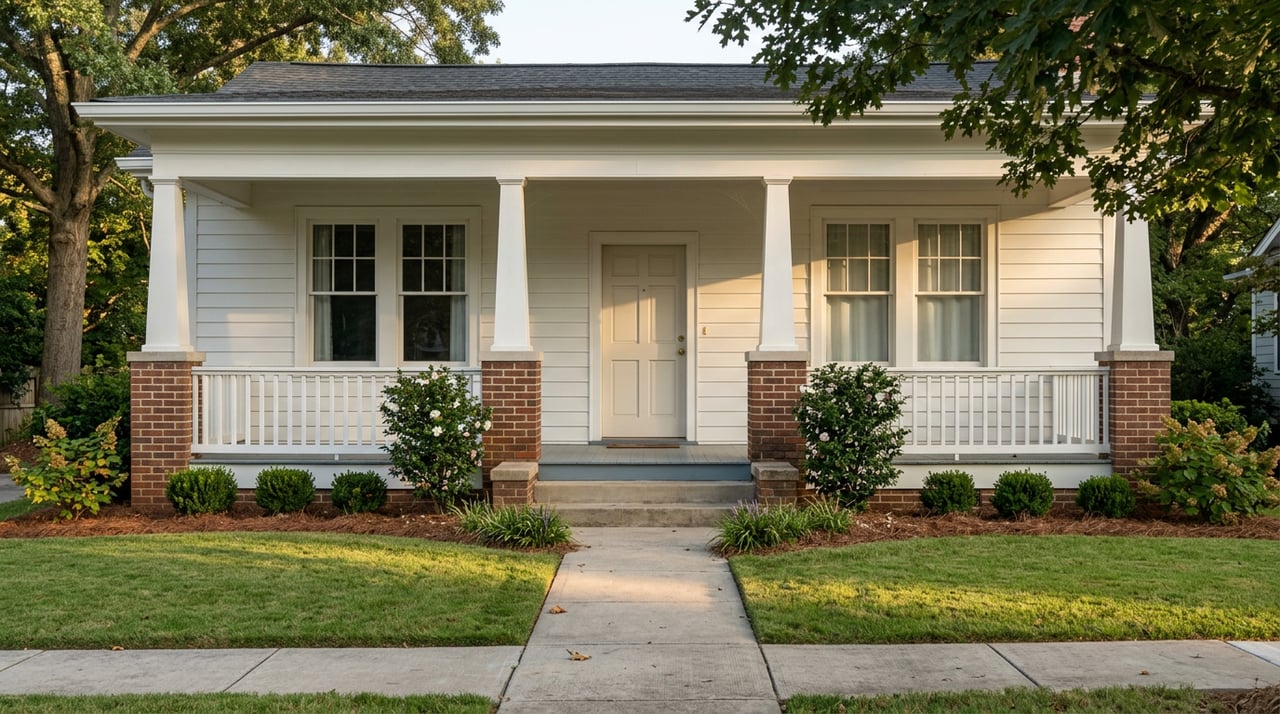
Garden Hills was platted in 1925 by Phillips Campbell McDuffie, an Atlanta lawyer who marketed the streets between Peachtree and Piedmont roads as "Beautiful Garden Hills" and planned the development in three phases radiating out from a pool and community center he intended to sit at its center from the start, according to the Garden Hills Civic Association. The oldest sections earned historic district status from the city in 1987, a designation that covers the winding streets and the mix of Georgian, Tudor, Spanish Revival and Craftsman homes built before the war, and the plainer ranch houses that filled in south of East Wesley Road after it, according to Wikipedia's summary of the district.
What makes that founding story matter almost a hundred years later is what didn't happen next. Plenty of 1920s Atlanta developments handed their shared amenities to the city, or to a homeowners association that quietly dissolved once the original build-out sold. Garden Hills didn't. The pool, the rec center, and the parks are still run by residents through two organizations that have outlasted the developer, the Depression, and several generations of Atlanta politics: the civic association and a separate pool and park association.
The Pool Board Runs on Paper Ballots, Not a Management Company
The Garden Hills Pool and Park Association operates the pool, the adjacent playing field, and the neighborhood recreation center under a lease agreement with the City of Atlanta, not as a city facility with city staff. It also runs the Cool Sharks, the neighborhood's own swim and dive team, according to the civic association's parks page. That distinction shows up in small operational details that a city-run pool wouldn't bother with. As of March 1, 2026, the pool already had enough Pool Rat candidates for the season and was only accepting names for a waitlist, while still actively hiring certified lifeguards age 15 and up, a hiring cycle the association runs itself every spring. On July 11, 2026, the Cool Sharks held an Adult Home Swim Meet from 9 to 11 a.m. that pushed the pool's public opening back to 11 a.m., evidence the swim program is still an active, resident-organized institution rather than a leftover amenity nobody uses.
That same volunteer structure governs who sits on the board. Membership elects the board by paper ballot cast in person at the pool's admissions desk, one vote per membership, a process closer to a homeowners' cooperative than a city recreation program.
Here's what that self-running calendar tends to look like as summer tips into fall:
| What you'll notice | What's actually happening |
|---|---|
| Lifeguard postings taper off | The association's own spring hiring cycle wraps up for the season |
| A weekday home swim meet shortens pool hours | The Cool Sharks are closing out their competitive schedule |
| Pool hours narrow to weekends only | The pool shifts to its members-only, weekend-only fall schedule around Labor Day |
| Ballots appear at the admissions desk | The annual volunteer board election, decided by paper ballot, not a proxy vote from a management firm |
| Mulch shows up on Sunnybrook's paths | A resident-organized cleanup day, historically run with Hands On Atlanta volunteers |
A Park the City Didn't Plant
Sunnybrook Park sits as a wooded strip with a stream and stone bridges between Brentwood Drive and Brentwood Terrace, and it carries a plaque installed by the Garden Hills Women's Club in 1934, nine years after the neighborhood was founded, according to the civic association. In 2016, the neighborhood added tree identification plaques to 27 different species along its paths, turning a daily dog-walking route into something closer to a self-guided arboretum.
The most recent evidence of that same instinct came in February 2024, when the civic association organized a cleanup day that drew more than 30 neighborhood volunteers alongside Hands On Atlanta. They spread mulch to reestablish the park's pathways, cleared invasive plants along the creek bank, and worked alongside Trees Atlanta, which had planted 45 native trees in the park earlier that month. Nobody waited on a city contractor to schedule it. The neighborhood scheduled it.
That pattern extends to the neighborhood's other City of Atlanta parks. Bagley Park, with its baseball diamonds, tennis courts, and picnic areas, hosts games for the neighborhood's Little League teams. Alexander Park sits directly across from the pool on East Wesley Road. Both are technically city property, but both show up on the same civic association calendar as Sunnybrook and the pool, maintained by the same overlapping cast of volunteers who treat all four parks as one system rather than four separate line items.
A Halloween Tradition Older Than Most of the Restaurants on Pharr Road
Garden Hills turned 100 in 2025, and the civic association marked it with a formal Centennial Celebration at Cherokee Town Club and a family event called Centennial in the Streets held in and around Sunnybrook Park, along with a hardcover coffee table book documenting the neighborhood's homes, gardens, clubs, and parks. That milestone year sat on top of a tradition that predates most of what's currently open on Pharr Road: the neighborhood Garden Club's annual Halloween Pizza Party, held every October on the neighborhood's playfield, a fixture long enough that longtime residents plan around it the way other neighborhoods plan around a school calendar.
What a Fall Saturday Actually Looks Like
- Morning: A weekend swim meet or a quiet lap swim, depending on where the pool's fall schedule has landed that particular week.
- Midday: A walk through Sunnybrook past the 1934 plaque and the tree tags installed in 2016, or over to Bagley Park if there's a Little League game.
- Afternoon: Errands along Pharr Road, with a stop at Sho Spicy if Peking duck sounds better than cooking. The restaurant took over the old Tasty China space and has become enough of a neighborhood habit that longtime residents still measure it against what used to be there.
- Evening: Basil's Restaurant and Tapas Bar, a Mediterranean spot that's operated since 1990 and still keeps a dog-friendly patio, or Local Three if it's someone's birthday again, which it often is.
- A walk north: The neighborhood's edge at Pharr Road opens onto Buckhead Village, where Atlanta Fish Market has served the region's seafood since 1993 under its 90-foot copper fish sculpture, a long enough run that it now counts as a Garden Hills institution by proximity even though the address is technically Buckhead's commercial core.
None of that itinerary depends on anyone from the city showing up to run it. It depends on the same overlapping volunteers, the pool board, the civic association, the Garden Club, who have been doing this work since a lawyer named McDuffie decided a pool and a community house should sit at the center of his development a hundred years ago. That's the part a listing description or a neighborhood ranking site will never quite capture: Garden Hills isn't charming because of its architecture. It's charming because the people who live there have spent a century refusing to hand off the parts of neighborhood life that actually make a neighborhood.
If you're weighing what a home near the pool or Sunnybrook is actually worth in today's market, or trying to figure out how a century of resident-run infrastructure factors into value on a specific street, David Pruett works Garden Hills and the rest of Intown Atlanta every day and can walk you through it. Book an appointment when you're ready to talk specifics.