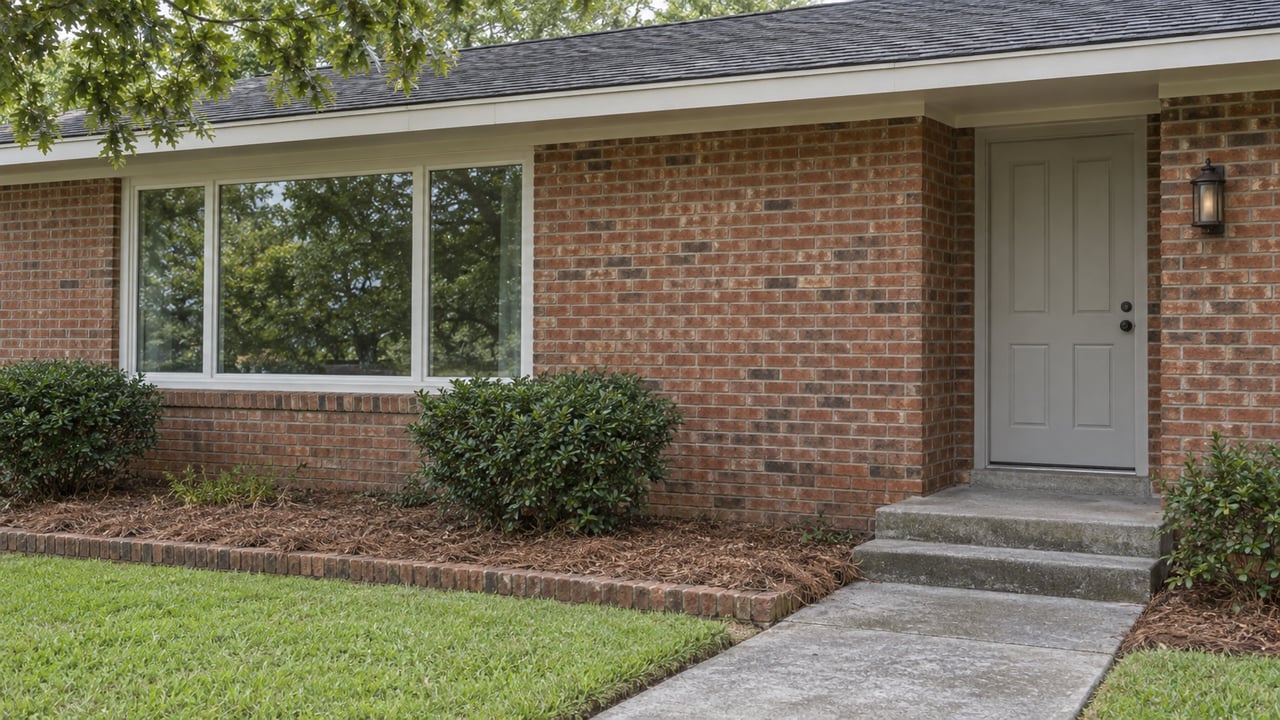
On January 20, 2026, a crew tore down 205 Peachtree Circle, an American Craftsman-style home that had stood in Ansley Park for more than a century. The new owners had bought the acre-plus lot to build something larger, and the city had already approved the demolition permit. No moratorium existed yet to stop them. The demolition proceeded under that approved permit.
If you've been looking at homes in Ansley Park, you've probably run into the fact that the whole neighborhood has sat on the National Register of Historic Places since 1979. It sounds like protection. It reads on a listing sheet like protection. On Peachtree Circle this year, it turned out to mean almost nothing at the parcel level, and the neighborhood spent the better part of 2026 finding that out in public.
What the plaque actually does
A National Register listing is a designation of historic significance. It can open doors to certain tax incentives for qualifying rehabilitation work. What it does not do is give any city, board, or neighbor the legal standing to stop an owner from tearing a house down or reworking its façade. Only a local historic district, granted by city council, carries that kind of enforceable design review. Ansley Park has had the first since 1979. As of September 8, 2026, it still does not have the second, not for Peachtree Circle and not for the neighborhood as a whole.
That distinction is the whole story. Everything else that happened this year, the meetings, the petitions, the accusations, was residents trying to close that gap after watching what happens when it stays open.
The year, in order
- January 2026 — 205 Peachtree Circle is demolished. Its size and century-old Craftsman styling had made it one of the street's defining lots. The teardown becomes the catalyst for a renewed push toward local historic protection.
- July 27, 2026 — The Ansley Park Civic Association's zoning committee finds the proposed Peachtree Circle historic district consistent with the neighborhood's master plan.
- August 4, 2026 — Neighborhood Planning Unit-E signs off.
- Early August 2026 — The city's Zoning Review Board clears the proposal, sending it to a full council vote.
- August 24, 2026 — Rather than let the council vote that day, District 6 Councilmember Alex Wan moves to shelve it, citing a lack of the two-thirds resident support he has required on Ansley Park historic matters since taking office in 2010.
- September 8, 2026 — The full council votes 11-4 to file the proposal, ending this attempt.
Six steps, most of them favorable to the district, and the effort still died on the council floor. It's the second time in four years an Ansley Park historic designation has collapsed under resident division. The 2022 neighborhood-wide attempt ended after a lawsuit from a property rights advocate. This year's narrower, single-street version ended because it couldn't clear a resident support bar that isn't written into any ordinance.
The bar that keeps moving the outcome
Here's the part that matters if you're trying to price risk on this street rather than just read the news about it. The two-thirds supermajority that sank this year's Peachtree Circle proposal is not a legal requirement. Wan has said so directly, calling it a standard he has personally applied to Ansley Park for well over a decade rather than something state or city zoning code demands. Wan has described the two-thirds mark as his way of honoring a longstanding understanding with the neighborhoods he represents on historic preservation, and it shaped the outcome here even though the city's process does not require it.
As of late August, roughly 40 of the more than 60 property owners who'd be affected were on record in favor. That's a clear majority. It wasn't enough.
"I've been through this before with y'all, and I knew this was where we would end up. And here we are." — Councilmember Alex Wan, September 8, 2026
Opposition on the street wasn't uniform obstruction either. Resident Drew Gandy, who had backed an earlier neighborhood-wide historic effort, asked for a 60-day continuance to get an appraisal on how a narrower, single-street designation specifically would affect his property, telling reporters his concerns were about this proposal's structure rather than preservation itself. Longtime resident Margaret Scarlett described the review process as short on genuine input. On the other side, David Yoakley Mitchell of the Atlanta Preservation Center called the missed vote a setback but not a conclusion: "Courage is not defined by defeat, and the idea that a majority was able to suppress a phenomenal opportunity doesn't mean it's dead."
What this means if you're evaluating a specific address
The practical takeaway isn't that Ansley Park is risky. It's that "Ansley Park" and "this parcel" answer different questions, and the National Register listing only answers the first one.
If a house you're considering on Peachtree Circle, or anywhere else in the neighborhood, sits on a large lot relative to its neighbors, the same economics that made 205 Peachtree Circle attractive to redevelop apply to it too. A century-old house on an acre-plus lot represents unused building capacity to a buyer thinking about a larger new structure, and nothing in the neighborhood's federal listing changes that math. The one home on the street with real, enforceable protection against demolition, the Randolph-Lucas-Jones House at 78 Peachtree Circle, got there through an individual city landmark application pursued privately by its owners, Roger Smith and the late Christopher M. Jones, not through the neighborhood's blanket historic status.
That's the diligence question worth asking on any specific parcel here: does this address carry its own individual landmark designation, or is it simply inside the boundary of a 1979 federal listing that has already been shown not to prevent demolition? Those are very different levels of protection, and a listing sheet won't distinguish between them for you.
For buyers weighing Peachtree Circle against a fully protected local historic district elsewhere in intown Atlanta, the comparison isn't about which street looks more historic. It's about which one has design review with teeth and which one is still, legally, an open field for whoever buys next.
What's likely next
Mitchell told Axios Atlanta after the vote that he doesn't see the push going away, and Roger Smith, who fought for the district as a Peachtree Circle owner, said he still considers some form of overlay protection imperative for the street. Neither of them controls the outcome. Wan does, and his stated bar for reintroducing the legislation is the same two-thirds support that just wasn't there. Nothing about the structural problem changed on September 8. The demolition risk that prompted this year's effort is still sitting on every large lot on the street, unaddressed by the one designation the neighborhood already has.
FAQ
Does a National Register listing affect what I can renovate on my own house in Ansley Park? No. The 1979 listing recognizes historic significance but imposes no design review or demolition restriction on individual owners. Only a city-granted local historic district or individual landmark designation does that.
If I'm buying on Peachtree Circle, how do I find out if a specific house has individual landmark protection? Ask directly whether the parcel has received its own city landmark designation, separate from the neighborhood's National Register status. The Randolph-Lucas-Jones House at 78 Peachtree Circle is the one confirmed example on the street; most other addresses, including the one demolished in January, carried only the neighborhood-wide listing.
Could the historic district effort come back? Preservation advocates have said publicly they intend to keep pursuing it. Any future attempt would need to clear the same two-thirds resident support standard that stopped the Peachtree Circle proposal in September.
If you're comparing Ansley Park to other intown streets and want a parcel-by-parcel read on what's actually protected versus what just looks protected, that's the kind of diligence David Pruett runs before a client ever writes an offer.